Vibe Coding Doesn’t End With the First Version
AI can help you build a website, but you still need to know what it should do, check that it works, and take care of it after launch.
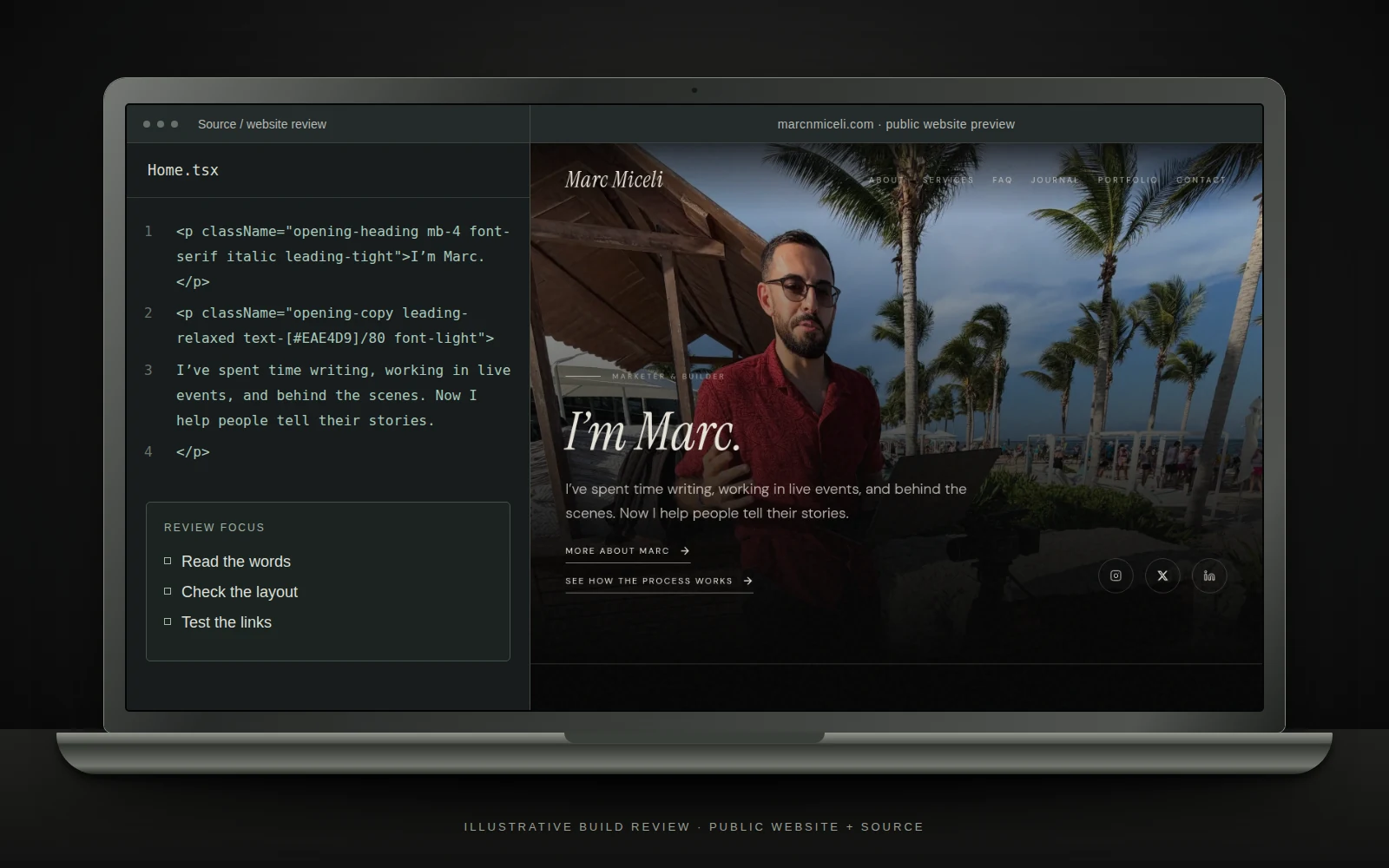
A Faster Start
Vibe coding usually means describing what you want in ordinary language, letting an AI tool generate or change the code, and responding to what you see. You can ask for a different layout, explain a broken interaction, or work through a feature without writing every line yourself.
That makes starting more accessible. It does not make the result dependable by default. A page can look finished long before the work behind it is ready for someone else to rely on.
I find that distinction more useful than arguing over whether using AI counts as building. The first convincing version gives me something to check, not a reason to stop checking.
Give the Work a Clear Brief
A request like “make me a business website” leaves almost everything undecided. Who is visiting? What should they understand? What should they be able to do? What information does the business actually need to collect?
Imagine a simple inquiry form. A useful brief would explain the required fields, the confirmation a visitor sees, where the inquiry goes, and what happens when sending fails. It would also say that submitting a question is not the same as booking an appointment.
Those are decisions about the service, not just the interface. If they remain vague, an AI tool may produce something plausible that promises the wrong thing.
Iteration Needs a Reason
There is a useful kind of iteration: notice a specific problem, describe the expected behavior, make a focused change, and check the result. There is also the less useful kind, where each new prompt changes the page without making the goal any clearer.
I would rather ask for a contact button that stays reachable on a short phone screen than ask for a page that feels “more premium.” One gives you something to verify. The other can send you through several attractive versions without solving the original problem.
Keeping changes small also makes it easier to notice when a fix breaks something that was already working. Speed helps most when you can still explain what changed and why.
A Prototype Is Not a Public Website
A prototype can answer whether an idea is understandable. A public website has to handle people who arrive on different devices, make mistakes, lose their connection, or use a keyboard or screen reader instead of a mouse.
That means checking more than the happy path. Try submitting an empty form. Try a long name. Open a direct link to an interior page. Refresh it. Read the text on a narrow screen. Follow the confirmation all the way through rather than assuming a message on the page proves delivery.
Accessibility belongs in that review from the start. Clear labels, visible keyboard focus, readable contrast, and sensible heading order are not decorative extras. They affect whether someone can use the thing you have made.
Know What Needs Another Pair of Eyes
Some problems are difficult to judge from the visible page. A polished screen does not tell you whether private information is protected, permissions are enforced, or a payment flow is safe. Asking the same tool whether its own work is secure is not an independent assessment.
For work involving accounts, payments, or sensitive data, I would bring in someone qualified to review those parts. Being clear about the limits of your own knowledge is more responsible than treating generated code as proof of expertise.
The same applies to the claims on the page. A working layout cannot verify a testimonial, a business result, or a promise about what a service includes. Someone still has to check the facts.
Keep Responsibility After Launch
A launch creates ongoing work: responding when something fails, keeping dependencies maintained, checking that inquiries still arrive, and knowing how to restore a working version. The person using the website should not have to care which parts were generated.
Before handing something over, I would want a clear owner for those responsibilities and an explanation of what support does and does not include. A site that nobody knows how to maintain is not finished just because it is online.
The First Version Is a Starting Point
AI can shorten the distance between having an idea and making a useful first version. That is worth taking seriously. It can give more people a way to explore an idea before committing to a larger build.
For me, the opportunity is to use that faster start without treating it as finished work. Review what changed, check what people will rely on, and keep a clear owner after launch.
Marc Miceli